

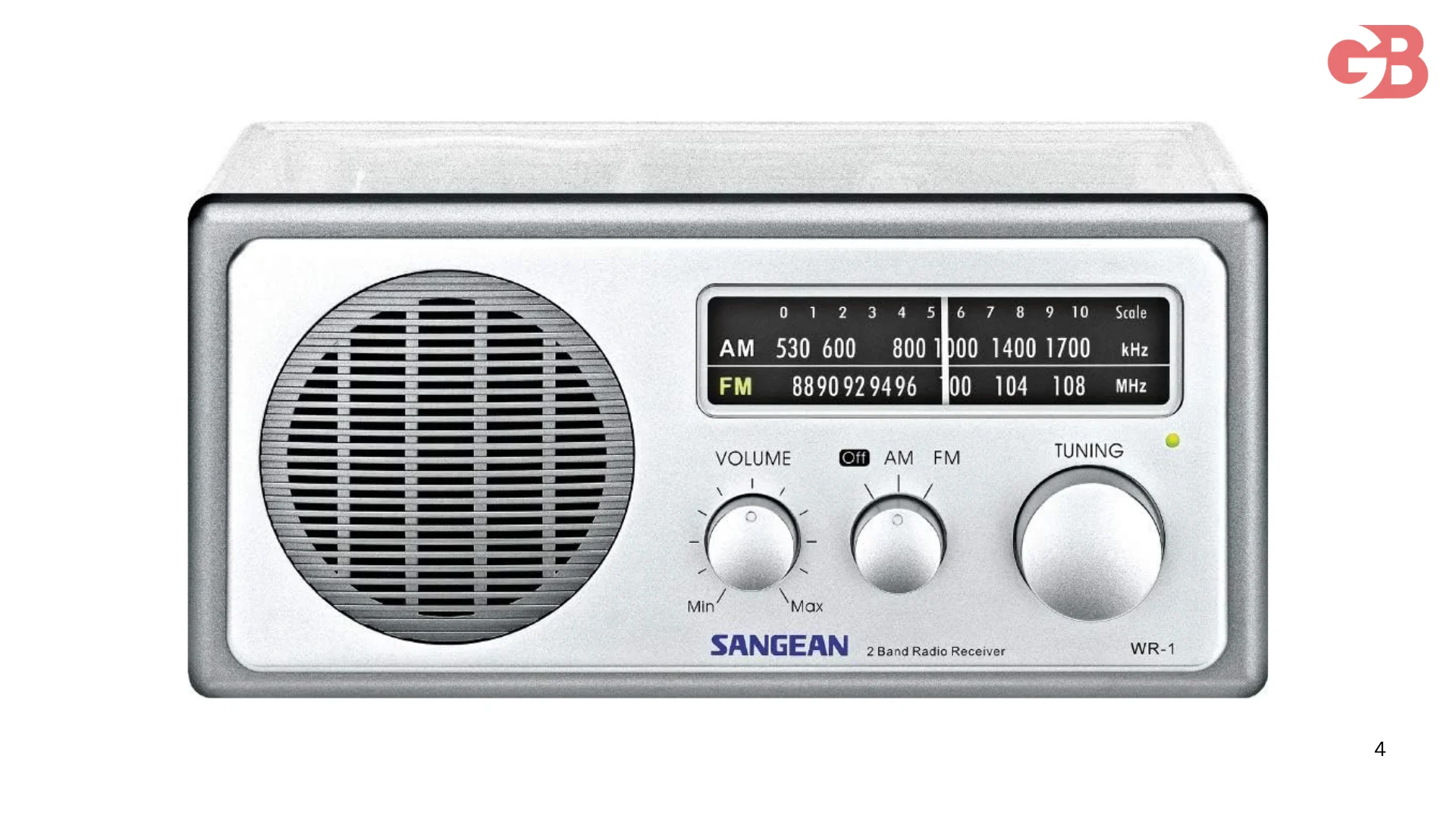
My dad still has an old FM radio on his kitchen counter. The thing crackles every morning, loses signal whenever someone walks past it, and he has to fidget with the antenna to get it working properly.
I told him there's a better option. He asked what DAB was. I realized I had to actually sit down and explain it properly.
So here's everything I know about DAB radio, broken down the way I'd explain it to anyone starting from zero.
DAB Radio in Plain English
Let's start with the basics.
DAB stands for Digital Audio Broadcasting. It's a digital technology used to transmit radio signals instead of traditional analogue FM broadcasts.
Think of it like the difference between a DVD and a VHS tape. Same content, completely different way of delivering it. One is older and degrades with interference. The other is clean and consistent.
Unlike FM radio, which transmits sound through radio waves and requires adjusting the frequency based on your location, DAB uses digital transmission. This gives it a much wider range and superior sound quality. Because it doesn't rely on radio waves in the same way, there's no interference.
So no more static. No more fiddling with the antenna. No more losing signal when you drive under a bridge.
 How Does It Actually Work?
I know some people just want the simple answer, but I find the tech side of this genuinely interesting.
The broadcasting station generates audio that is encoded into a series of zeros and ones, which is then sent to a transmitter. That transmitter distributes the digital signal over the airwaves, which is then decoded by a digital radio receiver.
It's basically the same idea as how digital TV works. The signal goes out digitally, your device picks it up and decodes it, and you hear clean audio on the other end.
DAB radio encodes audio into digital data packets and transmits them via a network of terrestrial transmitters. It uses multiplexing, which means multiple stations share a single frequency block, and has built-in error correction algorithms that reduce interference and dropouts.
That error correction part is important. Even if the signal gets a little rough, the radio can correct for it before you ever hear a problem.
What's the Difference Between DAB and DAB+?
You're going to see both terms when you're shopping for a radio, so let me clear this up now.
DAB is the original standard. DAB+ is the upgraded version and it's better in pretty much every way.
DAB+ is an enhanced version of the original DAB standard. It uses a more efficient audio codec called AAC+ that allows for better audio quality at lower bitrates, or more stations per multiplex. Most newer DAB radios support DAB+.
So DAB+ means more stations available and better sound quality using less bandwidth. It's genuinely worth making sure any radio you buy supports DAB+ and not just the original DAB standard.
When you see DAB+ on the box, that's the one you want.
DAB vs FM: What Actually Changes for You
I want to be practical here because specs only matter when they affect your daily experience.
Sound quality
FM radio can sound fine in ideal conditions. But the moment you're in a building, near other electronics, or just in a spot with weak signal, it gets fuzzy and crackly.
Performance benchmarks show DAB audio often equals or surpasses FM fidelity, especially in areas where FM suffers from multipath or long-range degradation.
With DAB you basically get the same clean sound regardless of where you are, as long as you have coverage.
More stations
This one surprised me when I first looked into it.
Theoretically speaking, one transmission tower can support more than 50 digital radio stations. One area usually has about 30 digital radio stations available, which is still much more than you can get from FM or AM radio.
So the channel selection is genuinely bigger. Not just your local FM stations but niche genre-specific stations, talk channels, and things that would never have their own FM frequency.
Station info on screen
With a DAB tuner, you can receive more information about the music you're listening to. It's possible to display song titles, artists, and album covers alongside the signal.
So you always know exactly what you're listening to. No more Shazam-ing songs on the radio.
No frequency hunting
On FM you're scanning for a specific wavelength and hoping it's clear in your area. On DAB, all available stations appear in a handy alphabetical list, so you can quickly switch between them.
It's more like picking from a menu than turning a dial.
The Extra Features You Get With Modern DAB Radios
This is where it gets interesting from a gadget perspective.
Modern DAB radios aren't just radios. They're actually pretty capable little devices.
Bluetooth
Many DAB devices are equipped with Bluetooth, so you can also use them as a speaker by connecting your phone or tablet. Switch from your favourite radio station to a Spotify playlist or Apple Music, all with the same high-quality sound.
So you're getting a proper speaker with Bluetooth capability built in. That's a solid deal for a device that fits on a kitchen counter.
Pause and rewind
Some DAB radios even let you record audio clips and allow you to pause and rewind shows so you never miss a thing.
I genuinely did not know this was a thing until I looked it up. You can actually pause live radio and come back to it. That's a feature I associate with streaming apps, not a standalone radio.
Alarm clock
Many DAB radios have an alarm clock feature. With it, you can wake up to your favourite stations as a sleep timer, entertainment, and the early morning news.
For a bedroom radio, this makes it a legitimate bedside gadget and not just a listening device.
Connect to your home system
Most DAB radios work as an audio output too. Just connect the DAB receiver to your existing sound system and listen to crystal-clear digital radio stations through your own familiar setup.
So if you already have a decent speaker system at home, you can just add a DAB receiver and push the signal through that. You don't have to replace anything.
Also Read: Electric Guitar for Beginners: Full Starter Guide
DAB in Your Car
This is something a lot of people ask about and I want to address it properly.
Many modern cars come with built-in DAB radios. You can also purchase aftermarket DAB adapters to add DAB functionality to older car radios.
So if your car doesn't have DAB built in, you're not stuck. Adapters are widely available and pretty affordable. You plug one in and your car radio gets DAB capability without replacing the whole head unit.
For commuters, the difference is really noticeable. No more signal dropping out when you go through tunnels or switch between areas. The station just stays clean.
Where Is DAB Available?
This is the important question and I want to give you the honest answer.
As of 2025, 55 countries are actively running DAB broadcasts as an alternative platform to analogue FM. The standard is dominant in Europe and is also used in Australia and parts of Africa.
In the UK, over 60 percent of radio listening is now on DAB, with coverage exceeding 98 percent of the population. Norway was the first country to switch off FM entirely back in 2017, and today 99 percent of homes there are within DAB's reach. Germany has DAB+ services in 75 percent of households with over 20 million receivers sold.
If you're in the US, the situation is a bit different. The US uses a different digital radio standard called HD Radio rather than DAB. So the DAB radios you see sold in the UK and Europe won't be relevant in the same way for American listeners.
But if you're in Europe, Australia, or a growing number of other countries, DAB is very much a live and expanding technology.
What Are the Downsides?
I want to be real with you here because DAB isn't perfect.
The biggest complaint is rural coverage. While urban zones enjoy near-full coverage, some remote regions still rely on FM relays or online streaming.
So if you're in a rural area, you might still get better FM reception than DAB depending on where exactly you are. Coverage maps are worth checking before you commit to a DAB-only setup.
The other thing is signal dropout. If you're listening and the reception happens to be poor, the stutter can actually be more unbearable than the fuzziness you get from FM radio.
FM in bad signal goes fuzzy and crackly. DAB in bad signal goes choppy and cuts out. Both are annoying but in different ways. For most people in covered areas it's never an issue, but it's worth knowing.
Battery life can also be a consideration. Digital radios can draw slightly more power, so look for models with efficient chipsets or auto-sleep modes.
What to Look for When Buying a DAB Radio
If you're shopping, here's what I'd actually pay attention to.
First, make sure it says DAB+ and not just DAB. As I mentioned earlier, DAB+ is the better standard and that's what most broadcasters are moving to.
When choosing a DAB radio, consider features like preset stations, a clear display, and a headphone jack.
Preset stations matter more than you'd think. Being able to save your ten favorite stations and jump between them instantly is so much better than scrolling through a list every time.
Think about where you're going to use it. Kitchen counter, bedroom, car, outdoors. Each one points to a different form factor. Portable models are great for moving around the house. Bigger tabletop models usually have better speakers and more features.
Bluetooth is worth paying for if you want it to double as a speaker for your phone. And if you care about waking up to radio, check that the alarm feature is solid before buying.
Is DAB the Future of Radio?
Based on everything I read, yes. Slowly but definitely.
Norway was the first country to fully switch off national FM radio stations back in 2017. Multiple other countries across Europe are planning FM switch-offs between 2027 and 2031.
FM isn't going away overnight everywhere. But the direction is clear. Digital is where radio is heading and DAB is the main standard driving that shift across most of the world.
Hybrid radio is also emerging, which allows seamless switching between DAB and online streams based on signal strength.
So the next generation of radios will be smart enough to pick whatever signal is best at any given moment. DAB when it's strong, internet stream when it's not. That kind of flexibility makes the whole experience more reliable.
My Take
DAB is one of those upgrades that sounds boring until you actually use it.
Once you hear radio without static, see the song info on the display, and realize you don't have to touch an antenna ever again, going back to FM feels genuinely outdated.
For anyone buying a radio in 2026, whether for the kitchen, the bedroom, or the car, I'd say skip the FM-only options entirely. DAB+ is worth the small price difference and you'll notice it every single day.
FAQs
What does DAB stand for?
DAB stands for Digital Audio Broadcasting. It's a digital technology used to transmit radio signals instead of traditional analogue FM broadcasts.
Do I need internet for DAB radio?
No. A DAB radio picks up digital signals from the air via a built-in receiver. You don't need an internet connection at all.
What's the difference between DAB and DAB+?
DAB+ is an enhanced version of the original DAB standard that uses a more efficient audio codec, allowing better quality and more stations per frequency block. Most new radios support DAB+.
Is DAB radio better than FM?
Yes in most cases. DAB offers superior sound quality, more stations, and no interference because it uses digital transmission rather than analogue radio waves.
Can I get DAB in my car?
Yes. Many modern cars have DAB built in, and you can buy aftermarket adapters to add DAB to older car radios without replacing the whole unit.