

Most people still think of Anker as a cable brand. The SOLIX lineup is something else entirely and it is worth understanding before you spend a dollar.
Here is something that catches a lot of people off guard. Anker, the company you probably know for USB cables and small charging bricks, now makes power stations capable of running a full household during a multi-day outage. The SOLIX brand is their dedicated energy division, and it has grown into one of the more serious options in the portable power space in a short amount of time.
The question worth asking before any purchase is not "is SOLIX good" but rather "which model actually matches what I need" because buying the wrong tier means either running out of power at the wrong moment or spending hundreds more than necessary.
How SOLIX Anker Built a Power Station Brand So Fast
SOLIX Anker has been making phone chargers and cables since 2011. SOLIX is their energy storage sub-brand, launched in 2023 specifically for power stations and solar. Unlike brands that resell third-party units under their own label, Anker designs and manufactures the SOLIX lineup in-house.
They came into the market later than Jackery and EcoFlow, but they came in with a clear angle. They entered the portable power space with LiFePO4 chemistry standard across the board, a 5-year warranty most competitors cannot match, and fast-charging architecture.
Anker offers faster charging through HyperFlash technology, longer battery life rated at 3,000 cycles versus 500 to 800 cycles on older chemistries, and a longer warranty than most competitors at a similar price point.
That combination of specs is exactly why SOLIX moved from being a late entrant to a brand that now appears on most serious shortlists in this category.
 The Two Families That Cover Everything
The SOLIX lineup splits cleanly into two families, and understanding which one you need makes the decision much simpler.
The C-Series for Camping, Work and Short Outages
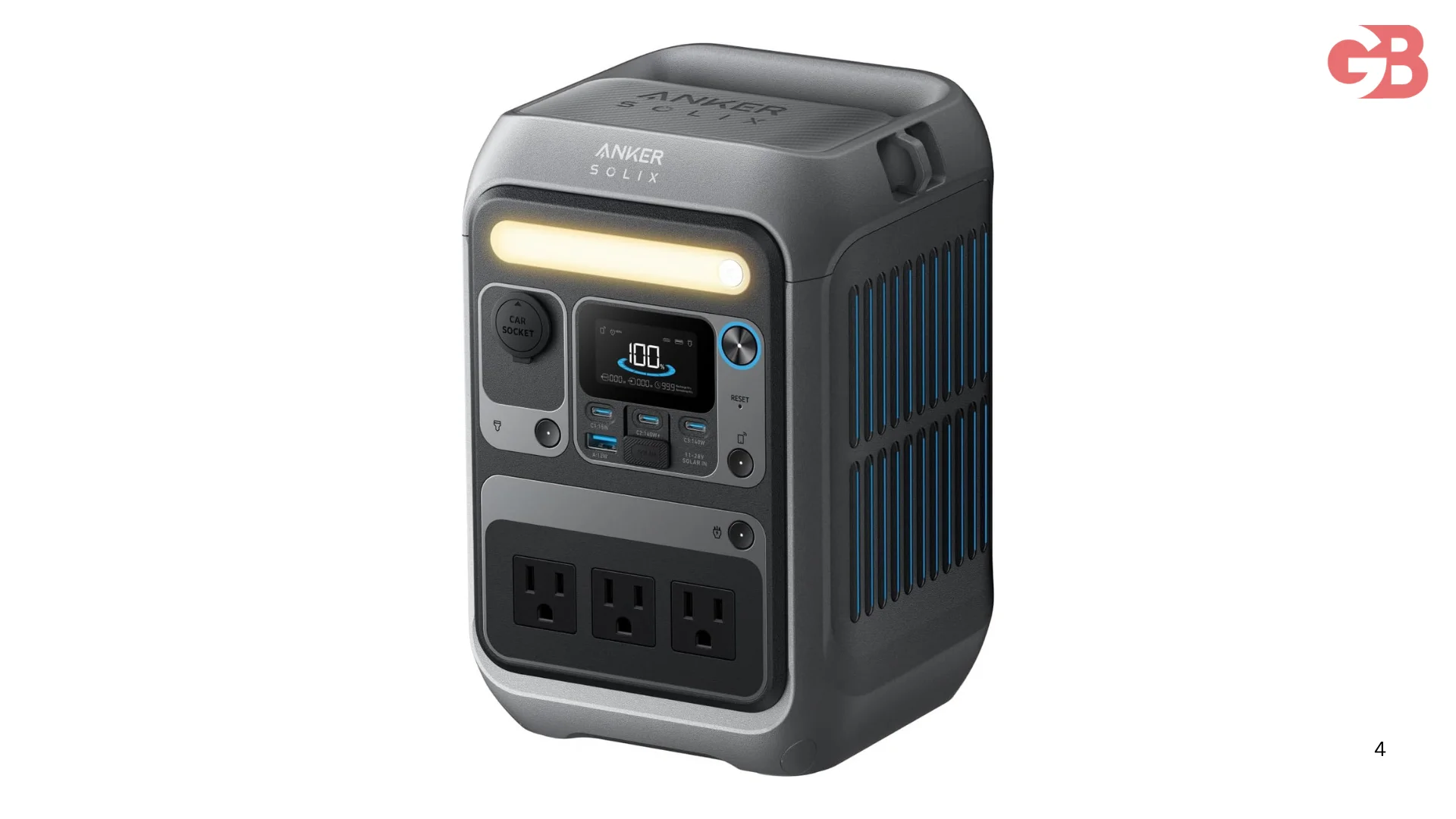
The C-series covers portable use cases. Think weekend camping, mobile work setups, RV trips, or keeping essentials running for a day or two during a power cut. Models in this range include the C300, C1000 Gen 2, and C2000 Gen 2.
The C1000 Gen 2 is a good representative of what this tier delivers. The 49-minute full recharge is a significant improvement for quickly prepping before a storm or trip. 2,000W of continuous power with a 3,000W peak handled everything tested, from a coffee maker to a space heater. The sub-10ms UPS switchover kept office electronics running without a single blink or reboot.
At 24.9 pounds it is portable but still a hefty lift to carry very far, and to get the 49-minute charge you need a specific high-wattage charger that is not included in the base box. That is worth factoring into the total cost if speed is the main reason you are considering this tier.
The F-Series for Home Backup at Scale
The F-series is where SOLIX competes with serious whole-home solutions. The F2000, F3000, and F3800 are the main models here, with the F3800 sitting at the top.
The F3800 starts at 3.84kWh and can expand by adding up to six battery packs, reaching 26.9kWh. Adding a second F3800 unit alongside 12 battery packs pushes capacity to enough power for approximately two weeks.
The 240V output is a genuinely meaningful differentiator. The 120V/240V and 6,000W AC output runs everything at home including dryers. The F3800 Plus can also directly charge an electric vehicle via the NEMA 14-50 port without complicated grounding accessories.
Testing with a full-size refrigerator running for 48 hours straight left 12% battery remaining. A table saw and air compressor running simultaneously produced zero voltage drops and zero shutdowns. Those are real-world loads, not controlled lab conditions.
The Battery Technology Behind the Lifespan Claims
Every SOLIX model uses LiFePO4 chemistry under what Anker calls InfiniPower technology. This is worth understanding because it directly affects how long the unit stays useful.
Standard LiFePO4 cells are rated for 3,000 cycles to 80% capacity under controlled lab conditions at 25 degrees Celsius. Real-world usage involves temperature swings, partial charge cycles, and voltage imbalances that accelerate aging by 30 to 50 percent.
Reddit discussions from verified Anker SOLIX C1000 users indicate units maintaining 85 to 90 percent capacity after 18 months of daily cycling. Comparable Jackery units at similar usage levels typically show 75 to 80 percent capacity retention at the same point. That gap compounds over years of use.
The 5-year warranty and LiFePO4 chemistry are genuine differentiators. For sump pump protection, medical device backup, or whole-home coverage during extended outages, the F-series belongs on your shortlist.
Also Read: LG vs Samsung TV: Which Brand Should You Actually Buy?
Where SOLIX Wins and Where It Does Not
Being straight about the limitations here matters, because no lineup wins everything.
SOLIX wins clearly on charging speed. With 2,400W solar input on the F3800, the unit recharged from 20 percent to 100 percent in just over 3 hours using optimal panel positioning, with the MPPT controller extracting maximum efficiency even in partial shade.
SOLIX wins on warranty depth across the board, and on build consistency. Build quality is consistently premium across the range. These feel like they were built to a spec, not a price point.
Where SOLIX gives ground is the app. Customer service gets mixed reviews. Products are solid but reaching a human when something goes wrong can take patience. EcoFlow's app is more capable for real-time monitoring and smart home integration, and that gap is documented across multiple 2025 reviews.
Anker is not objectively better than competitors. Jackery offers simpler operation and strong brand recognition. Bluetti provides more modular flexibility. EcoFlow matches fast charging and app features. SOLIX earns its place through longevity and total cost of ownership, not through dominating every single category.
Picking the Right Model Without Overthinking It
The range looks complicated from the outside but the decision is actually fairly simple once you know your use case.
If you camp regularly or need backup power for a day or two, the C1000 Gen 2 at around $600 covers most situations. If you have a household with medical devices, a sump pump, or you live somewhere with frequent multi-day outages, the F2000 is the practical starting point for serious backup. If you want whole-home coverage including 240V appliances and EV charging from a single unit, the F3800 is the answer.
Weekend camping typically needs 500 to 1,000Wh. The C800 Plus at 768Wh handles phones, lights, small coolers, and fans for two to three days. Start from actual need, not from headline capacity numbers, and the right tier becomes obvious quickly.
Frequently Asked Questions
Is Anker SOLIX actually better than EcoFlow or Jackery?
It depends on the priority. SOLIX leads on charging speed and warranty length. EcoFlow leads on app features and expandability. Jackery leads on simplicity and outdoor portability. None wins everything.
How long does the battery actually last?
The LiFePO4 battery is rated for 4,000 cycles while retaining 80 percent capacity, which corresponds to roughly a 10-year lifespan with regular use.
Can the F3800 run a whole house?
The F3800 can expand to 26.9kWh with additional battery packs, enough to cover essential home loads for several days depending on consumption. Calculate your critical loads first before assuming a single unit is enough.
Does the fast charging claim hold up in real use?
Yes, with a caveat. The 49-minute full recharge works as advertised, but requires a specific high-wattage charger that is not included in the base box. Budget for that separately if speed is the reason you are buying.
Is SOLIX safe for indoor use during a power outage?
Yes. Unlike gas generators, all SOLIX models run on battery power with no emissions or fumes, making them safe for indoor use in homes and apartments during outages.
The Bottom Line
Anker SOLIX is a genuinely competitive power station lineup that arrived later than its rivals but made up ground quickly through charging speed, build quality, and industry-leading warranty terms. The C-series handles camping and short-term backup well. The F-series is serious home backup equipment that can run a household through extended outages.
The app and customer service are the honest weak points right now. If deep smart home integration matters to you, EcoFlow is still ahead. If you want fast charging, strong warranty coverage, and a unit built to last a decade of real use, SOLIX belongs in the conversation.