

Two of the biggest TV brands, two very different philosophies. Here's how LG and Samsung actually differ and which one makes more sense for your room, habits, and budget.
People ask this question constantly, and it deserves a straight answer instead of a list of specs neither person will remember. The honest version is this: LG and Samsung are both excellent, but they're optimized for different things. Pick the wrong one for your situation, and you'll spend good money on a TV that underperforms in your specific room.
Here's how they actually differ.
The Core Technology Difference
This is where the comparison starts, because everything else flows from it.
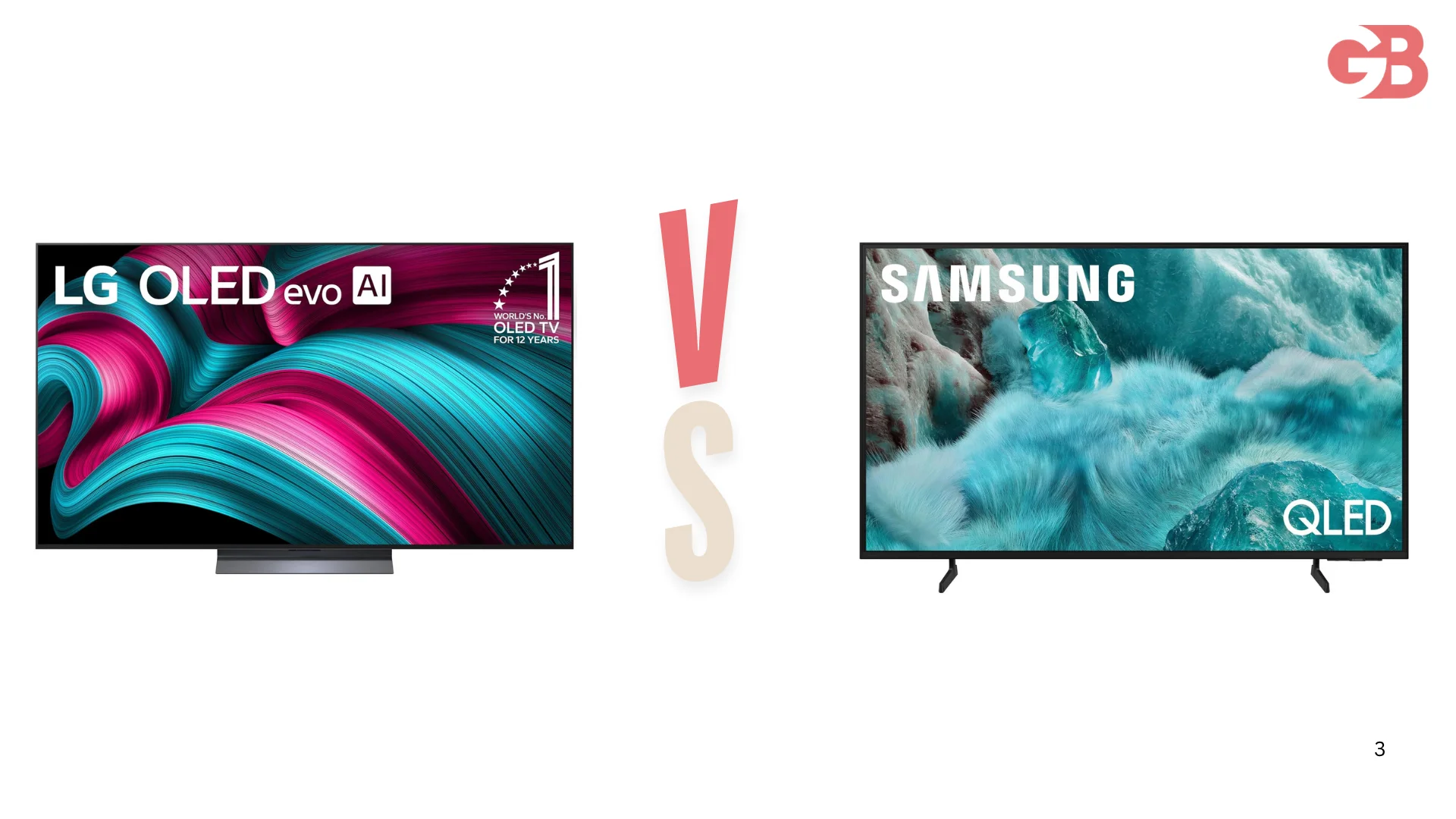
LG's flagship lineup is built on OLED each pixel generates its own light and can switch off completely to produce true black. The result is infinite contrast. Dark scenes in movies look exactly as the director intended, with shadows that don't glow and blacks that aren't just "very dark grey."
Samsung leads with QLED and Neo QLED a backlit LCD system enhanced with a quantum dot layer. Instead of controlling light at the pixel level, QLED controls it in zones, which allows the TV to reach much higher peak brightness. That brightness is real and impressive, especially for HDR content. The trade-off is that bright objects on dark backgrounds can sometimes produce a faint halo effect a limitation inherent to zone-based lighting.
Samsung also makes QD-OLED panels now, which combine quantum dot technology with an OLED base. These are genuinely excellent and compete directly with LG's best, but they sit at the premium end of Samsung's lineup.
Quick takeaway: OLED wins on precision and contrast. QLED wins on brightness and daytime visibility.
 Room Lighting
This honestly determines the answer for most buyers, and it rarely gets enough attention.
If your living room has large windows, faces south, or you regularly watch during the day Samsung is likely the better fit. Samsung's Mini-LED TVs handle glare better and push higher peak brightness levels. An LG OLED in a bright room will look washed out compared to its dark-room performance, because OLED panels simply cannot match the raw nit output of a well-implemented QLED.
If you watch primarily at night, in a dimmed room, or have a dedicated home theater setup LG OLED will likely give you a noticeably better picture. LG excels in OLED picture quality with perfect blacks, while Samsung stands out with bright, vibrant displays, especially in QLED models.
This isn't a close call. Room lighting should be your first question before brand loyalty, screen size, or price enters the conversation.
Gaming
Both brands have invested heavily in gaming features, and the differences come down to what kind of gaming you do.
LG's OLED panels have near-instant pixel response times. Because pixels change state extremely fast, motion blur is reduced, and fast-moving objects look clearer. This is especially noticeable in competitive games where quick camera movement is common.
Many Samsung Neo QLED TVs hit 144Hz, and a few stretch up to 240Hz. For PC gaming in particular, that higher ceiling matters. Samsung's Gaming Hub also integrates cloud gaming services like Xbox Game Pass streaming directly on the TV without a console useful if you game casually and don't want extra hardware.
LG supports Dolby Vision gaming, which Samsung does not. Samsung still refuses to pay the licensing fees for Dolby Vision, which means you won't be able to watch films quite how their creators intended. For console gamers using a PS5 with Dolby Vision enabled titles, this is a real limitation.
Also Read: Beats Fit Pro vs AirPods Pro 2
webOS vs Tizen
Neither operating system is dramatically better than the other, but they suit different households.
LG runs webOS clean, minimal, and easy to navigate. webOS excels in cross-platform compatibility beyond LG's ecosystem. Its ThinQ AI supports both Google Assistant and Amazon Alexa equally, and AirPlay 2 allows iPhone and iPad users to mirror screens effortlessly. If your home is a mix of Apple, Google, and other devices, webOS feels neutral and accommodating.
Samsung runs Tizen, which integrates tightly with the Samsung ecosystem. If you own multiple Samsung devices Galaxy phones, tablets, or wearables Tizen becomes exponentially more useful. Features like Smart View allow instant casting, while Multi Control lets you manage nearby Samsung monitors and audio devices from the TV.
On raw speed, Samsung's 2025 Neo QLED units boot in under 8 seconds, and app loading times are consistently faster across benchmarks, due to Tizen's lightweight architecture and tighter integration with Samsung's processors.
Tizen also notably lacks native Dolby Vision support on most models, defaulting instead to HDR10+ worth knowing if your streaming platform of choice uses Dolby Vision HDR.
The Burn-In Question
OLED burn-in gets brought up every time this comparison happens, and it deserves an honest answer rather than either dismissal or alarm.
OLED burn-in remains a valid concern, though less so than in previous years. Both LG and Samsung employ pixel shifting, logo dimming, and automatic brightness limiters to reduce risk.
In practical terms: if you watch varied content movies, streaming, sports burn-in is unlikely to be a problem in normal use. If you leave a static news ticker, sports score overlay, or HUD-heavy video game running for hours every day, the risk is real and measurable over years of use.
Samsung QLED panels carry no burn-in risk by design, which is a genuine advantage for households where the TV runs all day with consistent on-screen elements.
Price and Value Across the Lineup
Both brands span from budget to flagship, but the entry points differ.
LG's OLED B-series (currently the B5) offers genuine OLED quality at the lowest price point in their lineup. It's an entry-level OLED that doesn't get as bright or colorful as pricier OLED TVs, but it's nevertheless an OLED, so it's packed with performance-related upside. For buyers who want OLED without paying flagship prices, this is consistently one of the best-value options on the market.
Samsung's mid-range QLED lineup provides excellent brightness and color at competitive prices, but their top Neo QLED and QD-OLED models sit at a significant premium. Samsung's Neo QLED and QD-OLED models usually sit slightly above LG's in price, especially if you're going for top brightness and HDR punch.
Who Should Buy Which
Choose LG if:
You watch in a dark or controlled-light room
Picture quality and contrast are your top priorities
You use a PS5 or want Dolby Vision gaming support
Your household uses a mix of Apple, Google, and other devices
Budget OLED is your goal the B-series is hard to beat at price
Choose Samsung if:
Your room has strong ambient light or large windows
You already use Samsung Galaxy devices and want ecosystem integration
You're a PC gamer who wants 144Hz or higher refresh rates
You want zero burn-in risk for all-day viewing
HDR brightness and vivid color in daylight matter more than deep blacks
The Bottom Line
Neither brand is objectively better. LG builds the better TV for dark-room cinema watching, Dolby Vision support, and cross-platform smart home flexibility. Samsung builds the better TV for bright living rooms, Samsung ecosystem users, and anyone prioritizing maximum brightness in HDR content.
Figure out your room first. Then pick the brand.
Frequently Asked Questions
Which brand actually has better picture quality?
It depends on the panel type. In virtually every area from viewing angles to color accuracy, OLED sets match or beat LCD-based competitors hands down. LG OLED wins in dark rooms. Samsung QLED wins in bright rooms.
Does Samsung make OLED TVs too?
Yes Samsung's QD-OLED lineup is genuinely competitive with LG's best. Samsung's quantum dot OLEDs have come a long way, and 2025's S95F is easily the best model tested from the manufacturer, offering higher peak brightness while keeping 2024's game-changing anti-glare matte screen.
Is webOS or Tizen better for non-Samsung households?
webOS is the more neutral choice. LG's webOS integrates seamlessly with both Google Assistant and Amazon Alexa equally, making it more accommodating for mixed-device households than Tizen, which is most powerful inside Samsung's own ecosystem.
Is OLED burn-in still a real risk in 2025?
It's reduced but not eliminated. It's primarily a concern for static on-screen content used daily for long periods both LG and Samsung OLED models now employ pixel shifting, logo dimming, and automatic brightness limiters to reduce risk, but varied viewing habits are still recommended.
Which is better for a dedicated home theater setup?
LG OLED consistently wins for home theater use the combination of perfect blacks, accurate color, and Dolby Vision support creates a more cinematic experience in a controlled viewing environment.