


Here's something most buying guides skip telling you upfront: the "best" Bluetooth car adapter depends entirely on what your car already has not which device has the most glowing Amazon reviews. A budget aux adapter is completely useless if your 2008 car doesn't have an aux port. A premium FM transmitter is overkill if your car already has a USB audio input.
This guide starts with your car, not the product list. Once you know which type of adapter fits your situation, finding a good one is actually pretty easy.
First, Figure Out What Your Car Actually Has
Before spending anything, spend two minutes checking three things on your dashboard:
3.5mm aux port usually labeled "AUX IN," found near the gear shift or glove compartment in cars from roughly 2005 onward
USB port the rectangular port, sometimes labeled "USB AUDIO" (not all USB ports pass audio some only charge)
FM radio virtually every car has this, which is why FM transmitters have the widest compatibility
This matters because Bluetooth car adapters don't all work the same way. They fall into two fundamentally different categories and confusing them is the most common (and most frustrating) mistake buyers make.
 FM Transmitters vs. Aux Adapters
Think of an FM transmitter as creating a tiny private radio station inside your car. Your phone streams audio over Bluetooth to the transmitter, which then broadcasts it on an FM frequency say, 87.5 MHz and your car radio picks it up just like any station. It works on nearly any car with a radio and a 12V power outlet, no aux port required.
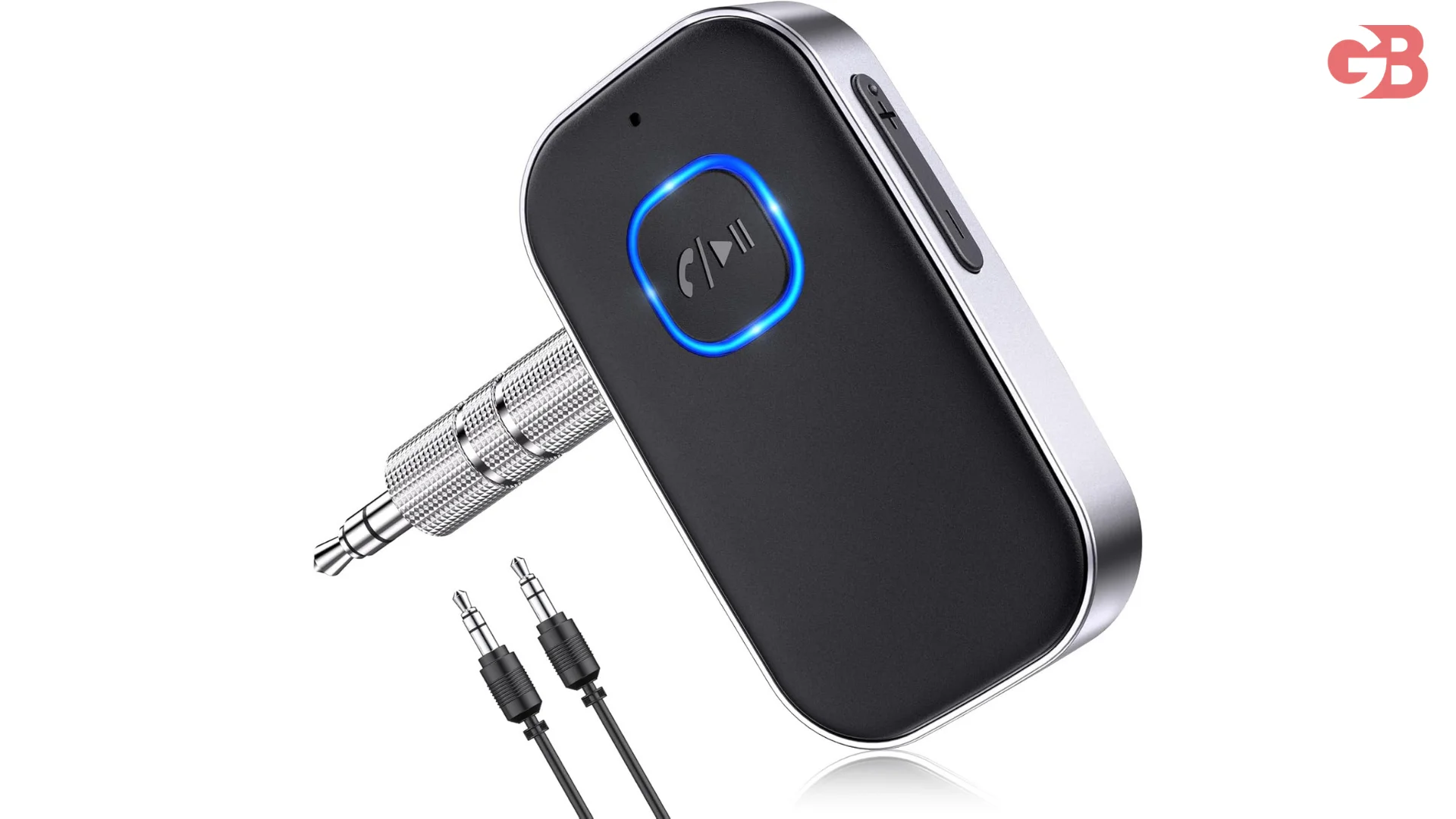
An aux adapter (also called a Bluetooth receiver) is simpler and, frankly, cleaner sounding. It connects to your car's 3.5mm aux jack with a cable, receives audio from your phone over Bluetooth, and passes it directly to the stereo. No FM broadcast involved, so there's no signal interference or static from nearby stations.
The practical difference? If your car has an aux port, use an aux adapter the audio quality is noticeably better. If it doesn't, an FM transmitter is your most practical option short of replacing the head unit entirely.
Real-world example: a driver commuting in a dense urban area will often struggle with FM interference because the FM band is crowded with active stations. The same adapter working beautifully in a smaller town may produce constant static in a big city not a product defect, just physics. An aux adapter sidesteps this problem entirely.
Top Picks by Use Case
Rather than ranking products from 1 to 10 (which means nothing without context), here's how the best options match up to different driving situations.
For Cars Without an Aux Port
The Nulaxy KM18 has earned its reputation as one of the most consistently recommended FM transmitters across multiple testing cycles. It plugs into the 12V (cigarette lighter) socket, has a flexible gooseneck so you can angle the 1.44-inch LCD display toward you, and handles both music streaming and hands-free calls with solid Bluetooth 5.0 stability.
What makes it stand out over cheaper alternatives isn't flashy features it's reliability. The auto-reconnect works properly (it pairs to your phone the moment you start the car without fiddling), and the display shows caller ID and battery voltage, which is a genuinely useful real-time diagnostic tool for checking your car's electrical health.
The KM30 is a worthwhile upgrade if you want more control: a larger 1.8-inch color display, bass and treble adjustment, and a 180-degree rotating screen. Worth it if audio customization matters to you.
One important caveat with any FM transmitter: spend the first week finding the clearest empty frequency in your area. In congested FM bands, you'll need to experiment. Once you find a clean frequency, lock it in and forget it.
For Cars With an Aux Port
The JOYROOM Bluetooth aux adapter (2025 version) runs Bluetooth 5.4 a meaningful upgrade over older 5.0 chips. Faster initial pairing, more stable connections, and better performance in areas with heavy wireless interference like parking garages and office complexes. Its dual microphone setup with noise cancellation makes it one of the better options for drivers who take a lot of calls, with one mic capturing voice and another sampling background noise to cancel it out.
The Avantree CK11 is the choice for audio purists. It has a built-in rechargeable battery (no need to stay tethered near the 12V socket), connects via a short aux cable, and is engineered specifically around sound quality rather than features. Compact enough to tuck away near the center console, and it sounds close to what you'd expect from a direct wired connection.
For context: if you regularly play lossless audio files or are particular about how your music sounds through car speakers, the difference between an aux adapter and an FM transmitter is actually audible. Aux adapters deliver cleaner audio because there's no FM broadcast step adding noise to the chain.
For Hands-Free Calling Priority
The IMDEN comes up consistently in reviews specifically for call quality, not just audio. Its CVC (Clear Voice Capture) 8.0 noise cancellation is one of the better implementations in the mid-range price bracket. CVC technology uses algorithms to filter out road noise, wind, and engine hum which matters enormously if your commute involves highway driving with windows down or a noisy diesel engine.
It also includes Quick Charge 3.0 on one of its dual USB ports, practical if you use navigation apps heavily (they drain batteries quickly). The combination of strong call quality, fast charging, and reliable FM transmission makes it a genuine all-rounder rather than something optimized for just one use.
For Older Cars
This one surprises a lot of people, but cassette Bluetooth adapters are still made and still work remarkably well. They convert a cassette deck's tape reader into an audio input, then receive your phone's audio over Bluetooth. If your vintage or classic vehicle still has a working cassette player, this is actually a more elegant solution than an FM transmitter because it's a direct signal path with no broadcast interference. Brands like GOgroove make reliable versions in this category.
Features
After sorting through what real-world testers consistently report versus what manufacturers highlight in marketing, here's the honest breakdown:
Worth prioritizing:
Bluetooth 5.0 or higher — not just for speed, but for connection stability in environments with lots of competing signals
CVC noise cancellation (8.0 if possible) — makes the difference between legible calls and shouting matches at highway speeds
Auto-reconnect — sounds basic, but cheaper adapters often require manual pairing every time you start the car
Over-current and over-voltage protection — important if you're also charging devices simultaneously; cheap adapters without this can damage phone batteries over time
Often overhyped:
Claimed Bluetooth range of 30+ feet — inside a car you're never more than a few feet from the adapter; range claims are essentially irrelevant
"Hi-Fi" audio claims on FM transmitters — FM broadcast has inherent limitations; no amount of marketing language changes the physics
LED lighting effects — fun for about a week, then just a distraction while driving
The Interference Problem
If you've ever had an FM transmitter that worked perfectly at home but produces static during your commute, here's why: FM transmitters are designed to use unused frequencies, but in dense urban areas there often aren't many. You're broadcasting on the same spectrum as actual radio stations, and when your car passes close to a strong transmitter tower, your signal gets overwhelmed.
The practical fix is either finding the clearest frequency (usually at the very low or high end of the FM dial 87.5 or 107.9 in many markets), or switching to an aux adapter if your car supports it. Some premium FM transmitters like the Roav SmartCharge F3 include automatic frequency scanning that finds the clearest channel for you, significantly reducing the manual tuning hassle.
Also Read: How Long Does a Tire Plug Last? The Honest Answer Most Sites Skip
A Word on Bluetooth Versions
Bluetooth 5.0 became the baseline around 2020, and most decent adapters today run 5.0 or newer. The 5.3 and 5.4 versions on newer adapters offer two practical improvements: faster re-pairing after the car sits overnight, and more reliable connections in environments saturated with Wi-Fi and other Bluetooth devices like shopping mall parking lots or urban offices.
If you're currently using an adapter that's three or four years old, the reconnection behavior is often the most noticeable improvement when upgrading. The audio quality difference between 5.0 and 5.4 is marginal for Spotify or podcast streaming, but the stability improvement is real and daily-noticeable.
What About Wireless CarPlay Adapters?
These are a different category and worth a mention because buyers sometimes confuse them with standard Bluetooth car adapters. Wireless CarPlay adapters (brands like Symtype, AutoSky, Acmount) are specifically for cars that already have wired CarPlay built in. They sit between your phone and the car's CarPlay port, converting the wired connection to wireless.
They work very well if your car qualifies typically 2016 or newer with factory-installed CarPlay and add $40–$80 to the cost of a standard adapter. But they're not a solution for cars without any built-in CarPlay infrastructure. If your car doesn't have CarPlay at all, a standard Bluetooth adapter is the right tool.
Common Mistakes
Buying an aux adapter for a car without an aux port. Always check first. It sounds obvious, but this accounts for a large percentage of "this doesn't work in my car" reviews online.
Ignoring FM band congestion in your city. Search for your city's active FM frequencies before buying a transmitter. If the dial is mostly occupied in your market, lean toward an aux adapter.
Expecting audiophile sound from any FM transmitter. These are convenience devices. For podcast listening and casual music they're excellent. For critical music listening, use an aux adapter.
Overlooking microphone quality. If you make calls regularly, the mic matters more than almost anything else. An adapter with good CVC noise cancellation will handle calls better than a pricier device with impressive features but a mediocre microphone.
Frequently Asked Questions
Will a Bluetooth car adapter drain my car battery if left plugged in?
Most modern FM transmitters draw minimal standby power when the car is off, and many shut off automatically when the 12V socket loses power (which happens in most cars when you remove the key). That said, some 12V sockets stay live even when the car is off. If yours does and you're parking for multiple days, it's worth unplugging. The drain is small but real.
My adapter connects fine but the volume is very low. What's wrong?
This is a common issue with aux adapters, and it almost always comes down to volume settings on two separate devices: your phone's media volume AND the car stereo's volume. Both need to be turned up. For FM transmitters, very low volume usually means the FM frequency is partially occupied by a nearby station try a different frequency.
Can I connect two phones to one adapter simultaneously?
Some adapters support dual-device connectivity, letting two phones stay paired at the same time useful for carpooling situations where you want to switch between drivers' playlists or take calls from either phone. Most budget adapters only maintain one active connection at a time, though a second phone will reconnect automatically when the first disconnects. Check the spec sheet before buying if this matters to you.
Why does my adapter work perfectly with one phone but poorly with another?
Bluetooth implementations vary between Android manufacturers and iOS versions. Pairing behavior, codec negotiation, and auto-reconnect reliability can differ based on the phone's Bluetooth stack. If issues persist after switching phones, simply delete the adapter from both devices and re-pair from scratch this resolves compatibility quirks more often than any other fix.
Is it worth spending more on a branded adapter versus a budget option?
For FM transmitters, the difference between a mid-tier product and a budget one is mostly build quality and long-term reliability rather than day-one performance. Cheap adapters tend to develop connection issues after 6–12 months due to component quality. For something you'll use daily, spending on a recognized brand like Nulaxy, JOYROOM, or IMDEN is reasonable value. Going significantly higher than that for a basic Bluetooth adapter rarely delivers proportional improvement unless you're looking at a specialized category like wireless CarPlay.
The Bottom Line
The best Bluetooth car adapter for your situation is the simplest one that solves your connectivity problem cleanly. If your car has an aux port, an aux receiver is almost always the better choice for audio quality. If it doesn't, a solid FM transmitter with CVC noise cancellation and Bluetooth 5.0+ covers music, calls, and charging in one compact device.
Don't let feature lists overwhelm the decision. A device that auto-connects reliably every morning, handles calls without static, and doesn't fall apart after six months is worth more than one with a color display and bass modes you'll stop noticing by week two.
This article is for informational purposes only. Product availability and pricing vary by region. Always verify compatibility with your specific vehicle before purchasing.